INDP, the Institute for Sustainability and Democracy Policy, is a newly founded independent research and consulting institute. It operates on a non-profit basis. Its objective is to make contributions to sustainable development and to democratic structures. We offer research, consulting, and innovation services in this area.
We are a team of experts that have comprehensive experience in the field of sustainable development. We are carrying out research and consulting projects at the level of communes, cities, regions, cantons, entire Switzerland as well as at the international level. In addition, we are involved in European and international projects, in cooperation with project partners in other countries.
Our institute is based in Luzern and Zürich.
Are you interested in supporting the further development of the institute? Please get in touch with us, we are looking forward to exploring a cooperation.
Our experts:
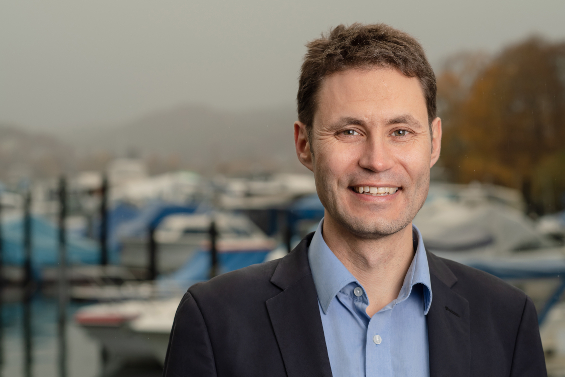
Roman Bolliger
MSc, BLaw, Master en études européennes
Roman Bolliger ist an expert in the field of energy and climate protection. He advises communes, cities, and regions on energy policy questions. Furthermore, he carries out research projects for cities, cantons, the national government as well as European or international organisations. He is a European Energy Award advisor since 2011. He supports several communes in the implementation of the European Energy Award approach, and he has supported several communes in achieving the respective award. Furthermore, he is accredited as an advisor for the 2000-Watt-society and as an advisor for energy regions; at international level, he is an International eea City Advisor. Based on his education he both has a background in natural sciences as well as in the fields of economy, law, and political science. He has 16 years of work experience in the fields of energy, climate and the environment. During this time, he has built up a broad network of contacts to other experts in these topics. Roman combines his experience from the work with communes and cities with research results for developing concrete policy recommendations.


Silvia Domingo Irigoyen
Dr. sc. Universidad de Navarra, MSc Architect
Silvia Domingo Irigoyen studied architecture at the University of Navarra in Spain and received her doctorate in building renovation. She has been active in teaching sustainable construction and urban planning since 2011. At the University of Navarre, she was a research assistant, teaching assistant and coordinator of a Master's programme. During her PhD, she spent six months researching at the ETH and encountered the Swiss context for the first time. Since 2016, she works as a researcher at the Institute for Building Technology and Energy at the Lucerne University of Applied Sciences and Arts. She is also an expert at INDP since 2018. Her work interests lie above all in the development of sustainable buildings and cities. Her research areas and fields of expertise include: sustainable construction, building simulation, life cycle cost, embodied energy, sustainability standards such as 2000 Watt Sites or on the Swiss Standard for Sustainable Building (SNBS), the development of strategies for the energy renovation of buildings and neighbourhoods as well as the investigation of measures for adapting the building stock to climate change. She has reviewed more than 25 indexed journal articles and regularly assesses Horizon 2020 proposals as an independent expert.

Here is a selection of current projects:
IEA EBC Annex 75 - Cost-effective Building Renovation at District Level Combining Energy Efficiency & Renewables
In this research project, we investigate the optimum balance between energy efficiency measures and renewable energy
measures for renovating buildings in urban districts. We take into account both decentralized and centralized solutions. The project is carried out in cooperation with international and national research partners.
Our contribution to the project is funded by the Swiss Federal Office of Energy and the cities Luzern and Zürich.
More information: http://annex75.iea-ebc.org/
RENEW-HEAT - Approaches for facilitating a switch to renewable energy based heating systems
Switching to renewable energies when replacing heating systems can decisively contribute to reduce CO2 emissions.
However, within cities and for buildings with high energy needs, this is often a challenge.
The project aims to identify technological approaches and regulatory approaches to facilitate such a switch.
We are coordinating this project in cooperation with our project partners from University of Applied Sciences OST,
University of Applied Sciences FHNW, University of Basel and University of Geneva.
The project is mainly supported financially by the Swiss Federal Office of Energy.
DeCarbCH - Decarbonisation of Cooling and Heating in Switzerland
The DeCarbCH project addresses the colossal challenge of decarbonization of heating and cooling
in Switzerland within three decades and it prepares the grounds for negative CO2 emissions. The
overall objective of the project (with the ultimate target of net zero emissions) is to facilitate, speed
up and de-risk the implementation of renewables for heating and cooling in the residential sector
(for various scales and degrees of urbanization) as well as for the service and the industry sector.
The project is carried out within the framework of the SWEET research programme. The project is coordinated by the University of Geneva,
in cooperation with 15 partner institutions. We are contributing to a task on identifying legal, organizational and economic measures
to overcome the current nontechnical barriers for a timely implementation and sustainable operation of efficient and socially desirable
technology combinations for heating/cooling provision.
Supporting municipalities in introducing and implementing the European Energy Award approach
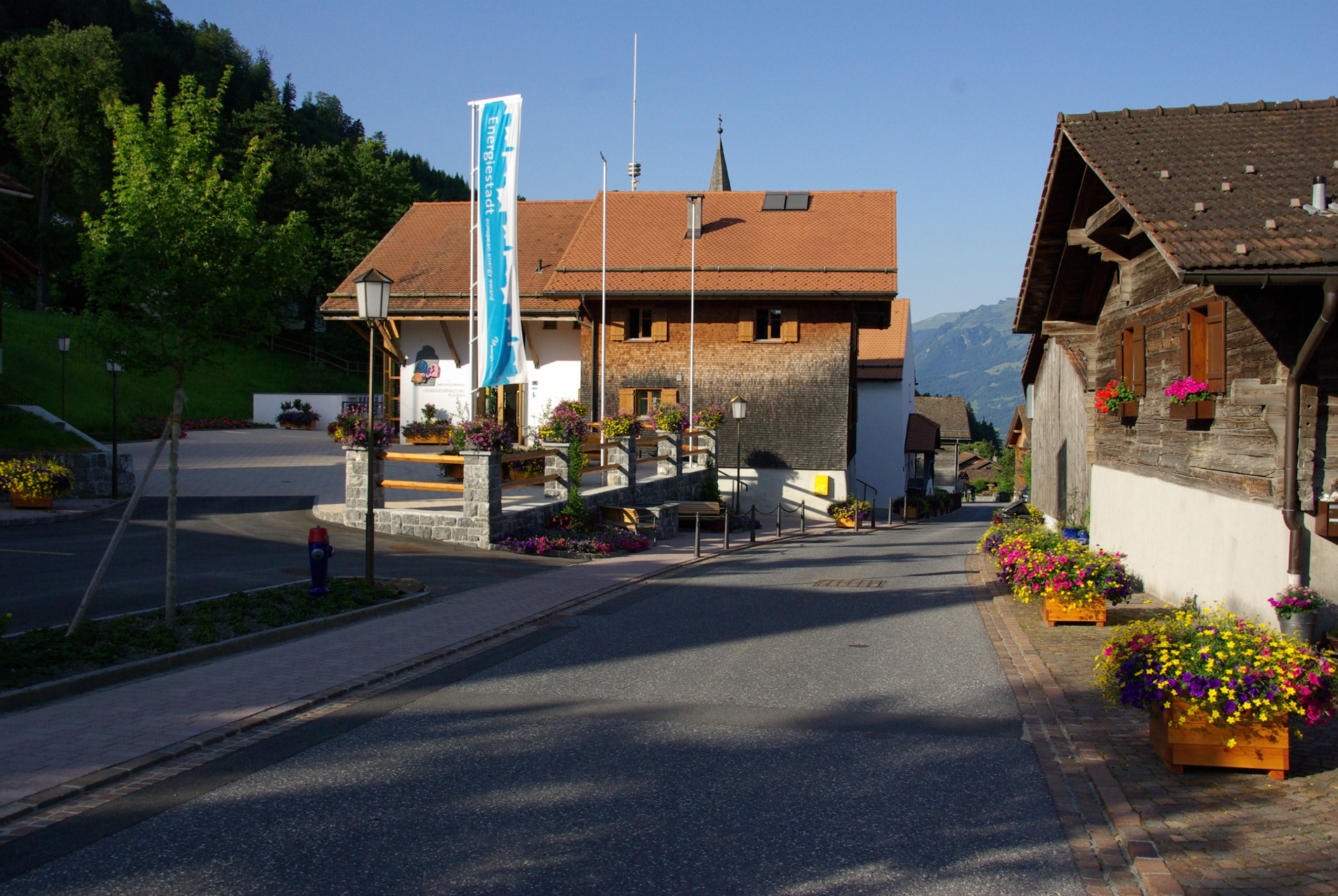
We support various local authorities in their activities within the framework of the European Energy Award approach. Among other things, we support them in the development of
energy guidelines, energy concepts, action plans, energy management, monitoring systems as well as communication and cooperation measures. In this context
we support local authorities both on the way to their initial certification with the label European Energy Award as well as on their further journey as an Energy City to use their municipal competences
at the local level for contributing to the energy transition and climate protection.
Further information: https://www.local-energy.swiss
Methodology for estimating the fair share of the remaining carbon budget for Switzerland to comply with the 1.5 °C target
We supported an NGO in leading a discussion on climate justice among church actors.
The aim of the documents provided with the project was to serve as a scientific basis for a discussion among church actors about what a fair remaining carbon
budget is for Switzerland in view of the global 1.5 °C climate protection target and the requirements regarding climate justice.
We developed a methodology paper and supported the organization of a
corresponding discussion.
Support for the energy region Knonauer Amt
We support the EnergieRegion Knonauer Amt in the development and implementation of its activities. The support provided is funded by the Swiss Federal Office of Energy.
Further information: https://knonauer-amt.ch/energieregion/
Promotion of the installation of PV systems through group purchasing projects facilitated by local authorities
Together with local partners, we carried out projects in two selected municipalities to promote the installation of photovoltaic systems through joint purchases for photovoltaic systems by private home owners. The idea is that appropriate
group purchases of photovoltaic systems lead to attractive offers for building owners and increase the interest and motivation
of building owners to install photovoltaic systems. The projects were funded by the participating municipalities and the Swiss Federal Office of Energy.
We are carrying out research and consulting projects in all three pillars of sustainable development: the ecologic pillar, the economic pillar, and the social pillar.
The targets for our work are the 17 Sustainable Development Goals, which were adopted by the 193 members of the United Nations on 25 September 2015 with the Agenda 2030.
The 17 Sustainable Development Goals are:
We consider democratic structures as an essential basis for a sustainable development which is supported by the people.
Do you have questions or do you have a need for consulting or innovation in these topics? We are gladly available to develop and carry out a respective project together with you.

INDP
Habsburgerstr. 3
6003 Luzern
Tel. +41 41 210 07 10